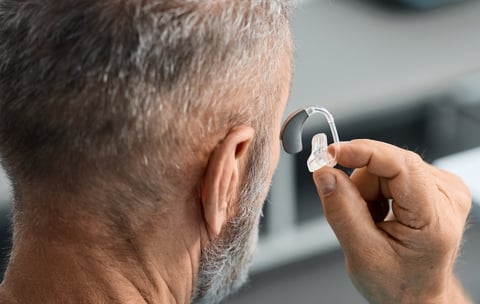
For years, hearing loss was treated as a natural, mostly harmless part of getting older. But over the past decade, a landmark body of research has changed that thinking. It turns out that treating hearing loss may be one of the most modifiable risk factors for cognitive decline we have.
What the Research Shows
The landmark 2020 report from the Lancet Commission on Dementia Prevention identified hearing loss as one of the top modifiable risk factors for dementia. The National Institute on Aging and Johns Hopkins University have published extensive findings linking untreated hearing loss to accelerated cognitive decline.
Key findings:
- Even mild hearing loss has been associated with an increased risk of cognitive decline.
- Untreated hearing loss may nearly double the risk of dementia in some studies.
- Treating hearing loss with hearing aids has been associated with a slower rate of cognitive decline.
Why the Connection Exists
Researchers point to several possible mechanisms. Untreated hearing loss means your brain works harder just to decode sound, leaving less cognitive reserve for memory and thinking. Hearing loss is also strongly associated with social isolation and depression — both of which are themselves risk factors for cognitive decline. When you can't easily follow conversations, you're more likely to withdraw from the very social engagement that keeps your brain sharp.
There's also evidence that reduced auditory stimulation may contribute to brain atrophy in areas responsible for processing sound and speech.
What You Can Do
The most important takeaway is that hearing loss is addressable. The first step is a comprehensive hearing evaluation to establish your baseline. From there, treating any hearing loss you have — whether through hearing aids, communication strategies, or other interventions — keeps your brain engaged and socially connected.
The Bottom Line
Protecting your hearing is protecting your brain. The earlier you address hearing loss, the more you can do to support long-term cognitive health.
Or call (309) 740-2880 to speak with our team.